Guía Operativa 2026
0% Aranceles UE con A.TR
5–8 Días Hábiles (Carretera FTL) | 36–48 Horas (Minivan Express)

Guía Paso a Paso Completa: Exportación de Mercancías de Turquía a la Unión Europea

Domine las 5 fases de la logística transfronteriza: selección de Incoterms, emisión de CMR, declaración BİLGE, certificado digital A.TR para 0% de aranceles, corredores Kapıkule vs Ro-Ro y despacho aduanero en la UE.

Updated October 2026 · Brosan Lojistik Operations Desk

Pasos Totales5 FasesFactura a Entrega
Tránsito Promedio5–8 DíasMiniván Exprés 36–48h
Sistemas AduanerosBİLGE y NCTSMEDOS e-A.TR
Corredores PrincipalesCarretera y Ro-RoKapıkule vs Trieste
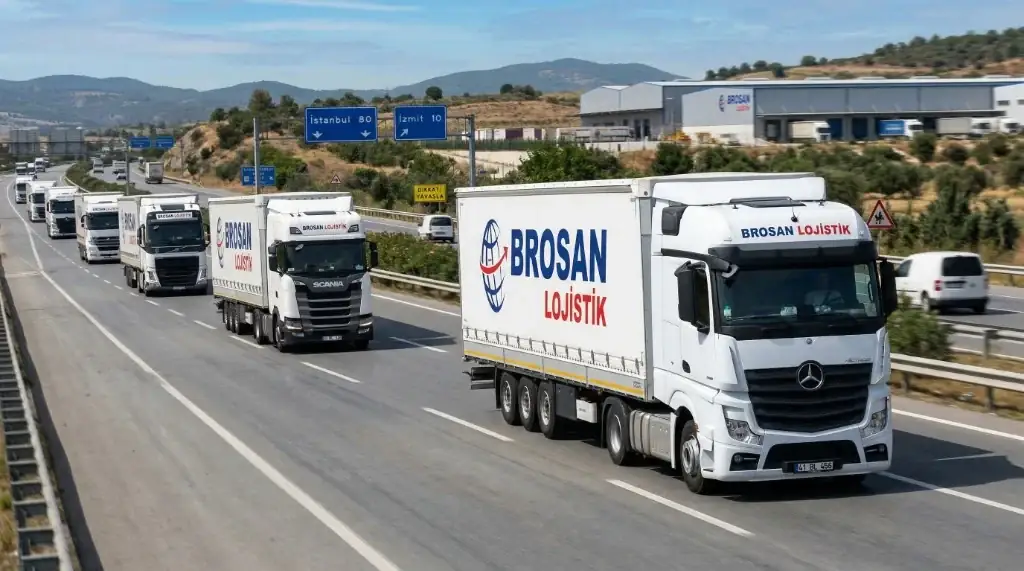
Flota de camiones modernos con el logotipo de Brosan Logistics realizando transporte internacional por carretera de Turquía a Europa
Operaciones de Transporte por Carretera en EuropaSalidas regulares FTL y LTL a través de Kapıkule y Ro-Ro Trieste
0% Aranceles vía A.TR y NCTS T1
Interactive Verification Simulator

Simulador de Preparación de Documentos de Exportación

Compruebe sus documentos de embarque para garantizar el cumplimiento aduanero antes de la salida.

2 de 7 documentos obligatorios verificados29%
Factura Comercial (Commercial Invoice)Step 1

Factura bilingüe en EUR con códigos arancelarios a 6-12 dígitos, regla Incoterms 2020 y EORI del comprador.

Lista de Contenido Export (Packing List)Step 1

Desglose pormenorizado de bultos, pesos netos/brutos, medidas y palets de madera con sello NIMF 15.

Carta de Porte Internacional CMRStep 2

Contrato de transporte en 4 ejemplares con número de precinto de alta seguridad ISO 17712 en casilla 19.

Declaración Aduanera de Exportación Turca (BİLGE)Step 3

Declaración electrónica cursada bajo régimen 10 00 con código de barras y número de registro de levante.

Certificado de Circulación Telemático A.TR (MEDOS)Step 3

Documento oficial con código QR emitido por TOBB y aduanas para la exención del 100% de aranceles en la UE.

Documento de Tránsito Comunitario T1 NCTS Fase 5Step 4

Título de tránsito con número MRN garantizado por el aval financiero global del transportista.

Comprobante de Entrega Conforme (CMR Casilla 24 POD)Step 5

Fecha, sello de empresa y firma del receptor certificando la llegada de la carga sin incidencias.

Step 1 of 5Fase 1: Preparación Comercial & Reserva1–2 Business Days

Cotización Previa al Envío & Selección de Incoterms

La base de cualquier exportación exitosa de Turquía a Europa radica en pactar reglas claras bajo Incoterms 2020, emitir factura comercial y lista de empaque sin errores, y calcular con exactitud el peso tasable volumétrico.

Mandatory Procedural Directions

  1. 1Seleccione la regla Incoterms 2020 idónea (priorice FCA o DAP frente a EXW para exportaciones turcas).
  2. 2Emita factura comercial bilingüe indicando códigos arancelarios (HS/GTİP), divisa y número EORI del importador.
  3. 3Elabore lista de empaque detallando pesos bruto/neto y embalaje en palets de madera conformes a NIMF 15.
  4. 4Calcule el peso tasable con la relación terrestre 1:3000 (1 m³ = 333 kg) y metros de carga (LDM).
  5. 5Reserve el transporte en Turkey Freight Quote indicando las especificaciones de la carga.

Operational Deep Dive & Sub-Tasks

1.1
Select the Appropriate Incoterms® 2020 Rule

Evaluate EXW vs FCA vs DAP/DDP. Under EXW, foreign buyers cannot easily lodge Turkish customs declarations without a domestic tax ID or power of attorney. FCA (Free Carrier) is strongly recommended for container and truck shipments: the Turkish seller completes export customs and hands cargo over to the buyer's carrier. For delivered freight, DAP (Delivered at Place) is the European standard where the seller handles transport to destination while the buyer clears local EU import customs and pays VAT.

Pro Tip: Avoid EXW for Turkish exports unless your buyer has an established Turkish fiscal representative. FCA gives the seller export proof required by the Turkish Tax Office to claim VAT refund (KDV İadesi).
Pitfall to Avoid: Using FOB for road trucking or container shipping. FOB is strictly maritime; use FCA for truck and containerized intermodal freight.
1.2
Draft Bilingual Commercial Invoice & Verify HS Codes

Prepare the commercial invoice in English (or Turkish/English bilingual). Mandatory fields: Seller and Buyer company names, addresses, tax IDs and Buyer EORI number; Invoice date and unique number; Incoterms 2020 rule with named place (e.g. 'DAP Munich, Germany Incoterms 2020'); 6 to 12-digit HS codes (GTİP); unit quantity, unit price, and currency (EUR/USD); and Bank payment details.

Pro Tip: Ensure your commercial invoice explicitly states the country of origin ('Origin: Turkey') to support subsequent preferential A.TR or EUR.1 certificates.
1.3
Compile Itemized Packing List with ISPM 15 Wood Certification

List carton counts, piece counts, and packaging types per pallet. Clearly tabulate gross weight and net weight per package and total consignment. All solid wood packaging (pallets, crates, dunnage) must bear the IPPC stamp verifying heat treatment under ISPM 15 standards to prevent quarantine rejection at EU borders.

Pitfall to Avoid: Using uncertified or untreated wooden pallets. EU border phytosanitary inspectors at Kapıkule or Trieste will reject untreated timber, resulting in severe delays and costly transloading.
1.4
Calculate Volumetric Weight & Loading Meters (LDM)

Calculate volume in cubic meters (Length × Width × Height in meters). Apply standard international freight conversion ratios: Road freight ratio is 1:3000 (1 CBM = 333 kg; 1 LDM = 1,750 to 1,850 kg). Air freight ratio is 1:6000 (1 CBM = 167 kg). Maritime ratio is 1:1000 (1 CBM = 1,000 kg). Chargeable weight is the higher of actual gross weight or volumetric weight.

Documentos de Exportación Obligatorios

Commercial Invoice (Ticari Fatura)1 Original + 3 Copies

Primary accounting and customs valuation document defining value, currency, and HS code.

Basis: Turkish Tax Procedure Law (VUK) & UCC Article 145
Export Packing List (Çeki Listesi)1 Original + 3 Copies

Detailed packaging breakdown with gross/net weight and pallet dimensions for physical customs inspection.

Basis: Turkish Customs Regulation Article 115
ISPM 15 Wood Packaging CertificateIPPC Heat Treatment Stamp on Pallets

Certifies solid wood packing material is treated against invasive biological pests.

Basis: FAO International Standard for Phytosanitary Measures No. 15

Costes Regulatorios y de Tránsito Típicos

Commercial Documentation & TranslationIn-house or translation agency • Seller (Exporter)
€0 – €50
ISPM 15 Heat-Treated PalletsStandard EPAL Euro pallet pricing • Seller (Exporter)
€12 – €18 / pallet
Consejo de Experto Despachador Brosan: Compruebe el número EORI de su comprador europeo antes de la salida. Un EORI incorrecto retendrá la carga en la aduana comunitaria.
Error Habitual a Evitar: Discrepancia de códigos arancelarios entre la factura comercial y la declaración aduanera electrónica BİLGE.
Step 2 of 5Fase 2: Despacho en Origen & Contrato CMR4–8 Hours (Day 1)

Recogida de Carga & Emisión de la Carta de Porte CMR

La entrega física de la mercancía al transportista activa su responsabilidad bajo el Convenio CMR de la ONU. El semirremolque debe revisarse, pesarse en báscula oficial, precintarse con sello de seguridad ISO 17712 y firmarse en 4 copias.

Mandatory Procedural Directions

  1. 1Inspeccione el camión internacional (lona Code XL tensada, suelo limpio, cinchas de amarre de 500 daN).
  2. 2Distribuya la mercancía equilibradamente sin sobrepasar el límite máximo de 40 toneladas de masa total.
  3. 3Obtenga el tique oficial de pesaje con tara y peso bruto.
  4. 4Instale precinto mecánico de alta seguridad certificado ISO 17712 en las puertas de la unidad.
  5. 5Formalice la carta de porte CMR en 4 ejemplares anotando el número de precinto en la casilla 19/20.

Operational Deep Dive & Sub-Tasks

2.1
Rigorous Pre-Trip Vehicle & Equipment Inspection

Before loading begins, driver and warehouse supervisor inspect the trailer. Ensure EN 12642 Code XL curtainside certification (withstands lateral forces up to 40% of payload without deformation), dry and odor-free wooden/composite floor with minimum 7,200 kg forklift axle rating, certified lashing ratchet straps (EN 12195-2 with minimum 500 daN tension rating), and heavy-duty anti-slip rubber mats.

2.2
Axle Weight Compliance & Load Securing

Distribute pallets longitudinally to maintain axle weight compliance under Turkish and European road laws (maximum 11.5 tonnes on drive axle, 24 tonnes on tri-axle semi-trailer group). Total gross combination weight must not exceed 40.0 tonnes (44.0 tonnes for intermodal container chassis).

Pro Tip: Always secure the final two rows of pallets with cross-strapping (X-lashing) to prevent load shift during emergency braking on European motorways.
2.3
Weighbridge Weighing & Kantar Slip Issuance

Drive to an authorized weighbridge station. Record empty tractor-trailer tare weight and laden gross weight. The official certified weight slip (kantar fişi) must be retained and attached to shipping files.

2.4
ISO 17712 High-Security Bolt Sealing

Close trailer rear doors or container cam handles. Apply an ISO 17712 High-Security (H-rated) steel bolt seal. The unique engraved serial number must be verified and recorded on the CMR note and customs files.

2.5
Issuance & Execution of the UN CMR Consignment Note

Complete the standard 4-copy CMR consignment note: Copy 1 (Red) for Sender, Copy 2 (Blue) for Consignee, Copy 3 (Green) for Carrier, Copy 4 (Black) for Administration. Ensure Box 1 (Sender details), Box 2 (Consignee), Box 16 (Carrier), Box 19/20 (Seal number & special agreements), and Box 22 (Sender stamp and signature) are properly executed. Under CMR Article 23, carrier liability is capped at 8.33 SDR per kilogram (~€10–11/kg).

Pitfall to Avoid: Failing to record the seal serial number in Box 19 of the CMR. If a seal is cut at customs without an official record, the exporter may be held liable for discrepancies.

Documentos de Exportación Obligatorios

CMR Consignment Note (Uluslararası Sevk İrsaliyesi)4-Part Colored Carbon Set (Red, Blue, Green, Black)

Legal contract of international road carriage, proof of receipt, and title documentation.

Basis: UN CMR Convention (Geneva 1956, Protocol 1978)
Weighbridge Weight Slip (Kantar Fişi)2 Copies

Certified proof of tare, gross, and net cargo weight for highway and maritime safety.

Basis: SOLAS VGM / Turkish Highway Traffic Law

Costes Regulatorios y de Tránsito Típicos

Weighbridge Weighing Fee (Kantar)Standard road weighbridge fee • Shared / Incoterm-dependent
€10 – €20
ISO 17712 High-Security Bolt SealProvided by Brosan Lojistik • Carrier / Forwarder
€3 – €8 / seal
Consejo de Experto Despachador Brosan: Los vehículos Euro-6 de Brosan Lojistik incorporan sensores telemáticos de carga por eje que alertan al centro de control antes de salir de Estambul.
Error Habitual a Evitar: Permitir la salida del chófer sin firmar la casilla 22 del CMR o dejar la casilla 19 sin el número de precinto.
Step 3 of 5Fase 3: Despacho Aduanero de Exportación en Turquía12–24 Hours (Day 2)

Declaración Aduanera de Exportación BİLGE & Emisión de Certificado A.TR

La declaración aduanera de exportación se presenta electrónicamente al Ministerio de Comercio turco en el sistema BİLGE por un agente de aduanas colegiado. Simultáneamente se emite el certificado de circulación A.TR vía TOBB MEDOS para exención de aranceles en la UE.

Mandatory Procedural Directions

  1. 1El agente registra la declaración bajo el régimen de exportación definitiva 10 00 en el sistema BİLGE.
  2. 2Asignación automática de circuito aduanero (Verde = levante directo, Amarillo = revisión documental, Rojo = inspección física).
  3. 3Emisión telemática del certificado de circulación A.TR con código QR verificable en la plataforma MEDOS.
  4. 4Visado electrónico oficial por la Cámara de Comercio y la Aduana de Turquía.
  5. 5Obtención del número de registro y código de barras de salida; autorización de partida del vehículo.

Operational Deep Dive & Sub-Tasks

3.1
Electronic Declaration Submission via BİLGE System

The licensed customs broker logs into the Ministry of Trade's BİLGE system using a secure e-signature and company Power of Attorney (Vekaletname). The broker inputs exporter details, consignee EORI, HS code, cargo value in EUR, currency conversion rate, package marks, vehicle license plate, and border exit gate (e.g. Kapıkule TR220100 or Pendik Ro-Ro TR341300).

3.2
Automated Inspection Line Assignment (Hat Belirleme)

Upon submission, BİLGE's risk engine assigns an inspection channel: Green Line (Yeşil Hat - Immediate clearance for Authorized Economic Operators / YYS holders); Yellow Line (Sarı Hat - Documentary scrutiny of invoice, packing list, and certificates without cargo opening); Red Line (Kırmızı Hat - Physical cargo inspection, seal opening, and container x-ray scanning at customs bonded yard).

Pro Tip: Holders of YYS (Authorized Economic Operator) status benefit from Green Line clearance, clearing export customs in under 30 minutes without stopping at local customs offices.
3.3
MEDOS Electronic A.TR Movement Certificate Generation

Under the EU-Turkey Customs Union (Decision 1/95), industrial goods in free circulation move duty-free (0% basic customs tariff). The broker generates the electronic A.TR certificate through MEDOS (managed by TOBB). The Chamber of Commerce approves the document electronically, and Turkish Customs applies an automated electronic customs endorsement and QR verification code.

Pitfall to Avoid: Confusing A.TR with EUR.1. A.TR proves free circulation status for industrial goods under the EU Customs Union. Agricultural and coal/steel goods require EUR.1, not A.TR. Trade with the UK or Switzerland also requires EUR.1 under separate FTAs.
3.4
Document Cross-Matching & Export Registration

Verify that the HS code, net weight, invoice number, and valuation on the BİLGE declaration match the MEDOS A.TR certificate with absolute precision. Pay mandatory Exporter Association fee (İhracatçı Birlikleri nisbi aidat).

3.5
Customs Registration Approval & Departure Authorization

Customs officer signs off electronically. The declaration receives an official Registration Number (Tescil Numarası). The trailer is cleared to proceed under customs transit to the exit border or Ro-Ro port.

Documentos de Exportación Obligatorios

Export Customs Declaration (Gümrük Beyannamesi)Electronic XML + 1 Printed Copy with Barcode

Official statutory declaration to the Turkish government of goods leaving national customs territory.

Basis: Turkish Customs Law No. 4458 Article 60-70
A.TR Movement Certificate (A.TR Dolaşım Belgesi)Electronic QR-coded Document

Proves free circulation under the EU-Turkey Customs Union, granting 0% customs duty at EU destination.

Basis: Decision No 1/95 of the EC-Turkey Association Council
Customs Power of Attorney (Gümrük Vekaletnamesi)Notarized Original registered in BİLGE

Legal authorization granting the customs broker authority to represent the exporter.

Basis: Turkish Notary Law & Customs Law No. 4458

Costes Regulatorios y de Tránsito Típicos

Customs Brokerage Service Fee (Gümrük Müşavirlik Ücreti)Standard export brokerage tariff • Seller (Exporter)
€75 – €150
MEDOS A.TR Electronic Approval FeeTOBB Chamber document fee • Seller (Exporter)
€35 – €60
Exporter Association Registration (Nisbi Aidat)Statutory union fee • Seller (Exporter)
0.05% – 0.1% of FOB value
Consejo de Experto Despachador Brosan: Brosan Lojistik dispone de agentes presenciales en las principales aduanas de Estambul (Erenköy, Muratbey, Ambarlı) y Mersin para agilizar despachos en canal rojo.
Error Habitual a Evitar: Tramitar un certificado A.TR para el Reino Unido o Suiza. Al no formar parte de la Unión Aduanera UE-Turquía, requieren certificado EUR.1.
Step 4 of 5Fase 4: Corredor de Tránsito Internacional3–6 Days (Days 3 to 6)

Tránsito & Cruce de Fronteras (Carretera vs Ro-Ro Marítimo)

La mercancía se transporta bajo el régimen de tránsito T1 NCTS Fase 5 con garantía financiera global. El cargador elige entre el corredor por carretera de Kapıkule y la autopista del mar Ro-Ro hacia Trieste o Tolón.

Mandatory Procedural Directions

  1. 1Apertura de la declaración de tránsito NCTS Fase 5 con número de referencia MRN y aval bancario.
  2. 2Elección de ruta: carretera Kapıkule (72-120h) o Ro-Ro intermodal Pendik/Yalova ➔ Trieste (-62% CO2, 5-6 días).
  3. 3Despacho de salida en la aduana de Kapıkule o embarque de la unidad en el buque Ro-Ro.
  4. 4Entrada en el territorio aduanero de la UE a través de Kapitan Andreevo (Bulgaria) o el puerto de Trieste (Italia).
  5. 5Control telemático 24/7 con avisos de geocerca, descanso reglamentario de conductores y control continuo de temperatura.

Operational Deep Dive & Sub-Tasks

4.1
Lodgement of NCTS Phase 5 T1 Transit Declaration

The freight forwarder lodges an electronic T1 transit declaration into the Common Transit Convention's NCTS Phase 5 system. The T1 is assigned an 18-character Movement Reference Number (MRN) and barcode. The forwarder must provide a comprehensive financial customs guarantee covering EU import duties and VAT throughout transit until destination discharge.

4.2
Corridor Selection: Overland Road vs. Ro-Ro Intermodal

Route Option A (Kapıkule Overland Road): Travels from Istanbul via Edirne to Kapıkule (TR) / Kapitan Andreevo (BG - EU External Border Gate) ➔ Bulgaria ➔ Serbia (or Romania) ➔ Hungary ➔ Central Europe. Transit time: 72–120 hours. Best for high-urgency, express minivan, or regional Balkan cargo. Route Option B (Ro-Ro Intermodal Sea-Bridge): Semi-trailer boards Ro-Ro ferry at Pendik, Yalova, or Çeşme to Port of Trieste (Italy) in 60–65 hours sea transit, transferring onto electric block trains to Munich, Ludwigshafen, Bettembourg, or Rotterdam. Transit time: 5–6 days. Cuts carbon emissions by over 60%, avoids Bulgarian/Serbian road queues, and operates without driver Schengen visa constraints.

Pro Tip: During holiday peaks and seasonal harvest times, Kapıkule truck queues can reach 24 to 48 hours. Shifting non-urgent cargo to Ro-Ro intermodal eliminates queue uncertainty and aligns with EU CBAM carbon reduction goals.
4.3
Border Customs Clearance & Biometric Verification

At Kapıkule or Trieste port gate, customs authorities scan the MRN barcode, inspect vehicle seals against the CMR and T1 declaration, verify driver passports and visas, and conduct random gamma-ray scanner checks.

4.4
24/7 Telematics Tracking & European Driving Hours Compliance

Brosan Lojistik operations monitor the vehicle via GPS telematics. Drivers strictly observe EU Regulation (EC) No 561/2006 (maximum 9 hours daily driving, mandatory 45-minute break every 4.5 hours, 11 hours daily rest). For urgent shipments, double-driver teams operate continuously to maintain 36–48h express minivan transits.

Documentos de Exportación Obligatorios

NCTS T1 Transit Declaration (Transit Refakat Belgesi)Electronic MRN + Transit Accompanying Document (TAD)

Bonded customs document allowing non-cleared cargo to traverse intermediate European countries duty-free.

Basis: Common Transit Convention (CTC) Phase 5
Bilateral Transit Permits (Geçiş Belgesi / Doçola)Original Physical Permit in Vehicle

Authorizes Turkish heavy freight vehicles to traverse transit nations (Bulgaria, Serbia, Hungary, Austria).

Basis: Bilateral Road Transport Agreements & ECMT (UBAK)

Costes Regulatorios y de Tránsito Típicos

NCTS T1 Comprehensive Financial Guarantee FeeCoverage based on cargo duty/VAT value • Shared / Forwarder
€50 – €90 / declaration
Ro-Ro Sea Bridge Freight & Bunkering (if selected)Pendik/Yalova to Trieste vessel passage • Buyer or Seller (Incoterm)
€1,200 – €1,800 / trailer
Consejo de Experto Despachador Brosan: Todas las unidades de Brosan Lojistik cuentan con doble localizador GPS con sensor anti-intrusión y termógrafos certificados bajo normativa GDP para farmacéuticos.
Error Habitual a Evitar: Agotamiento de cuotas de permisos bilaterales de tránsito (doçola) a final de año (noviembre-diciembre) vía Hungría/Austria; planifique alternativa Ro-Ro.
Step 5 of 5Fase 5: Despacho en Destino & Última Milla24–48 Hours (Days 6–7)

Despacho de Importación en la UE & Entrega al Destinatario

Al llegar a la aduana de destino o terminal autorizada, se ultima el documento T1. El agente del importador presenta la declaración de importación, aporta el A.TR para aplicar el 0% de arancel, liquida el IVA y firma la casilla 24 del CMR como prueba de entrega conforme (Clean POD).

Mandatory Procedural Directions

  1. 1Cierre del tránsito T1 en la aduana de destino o instalaciones de destinatario autorizado.
  2. 2Presentación de la declaración de importación en el sistema aduanero nacional del país de la UE.
  3. 3Acreditación del certificado electrónico A.TR para disfrutar de exención arancelaria total.
  4. 4Liquidación o aplazamiento del IVA a la importación mediante el mecanismo de representación fiscal.
  5. 5Posicionamiento del camión en el muelle de descarga del cliente y firma sin reservas de la casilla 24 del CMR.

Operational Deep Dive & Sub-Tasks

5.1
Discharge of T1 Transit Declaration in Destination EU Customs

The truck reports to the destination inland customs office (Zollamt in Germany, Bureau de douane in France) or an authorized consignee facility (Zugelassener Empfänger). The customs officer or authorized forwarder scans the MRN barcode in NCTS, releasing the financial guarantee bond and terminating transit status.

5.2
Electronic Import Declaration & 0% Duty Application via A.TR

The consignee's customs broker files the Single Administrative Document (SAD / IMA) in the national customs system (e.g. ATLAS in Germany, DELTA in France, DMS in the Netherlands). The broker inputs the electronic A.TR certificate number and QR code. Under the EU-Turkey Customs Union, the basic customs tariff is reduced to 0.0%.

Pro Tip: Without a valid A.TR certificate, the EU customs system will automatically apply standard third-country MFN tariffs (ranging from 2.5% to 14% on manufactured goods).
5.3
Destination Import VAT Handling & Fiscal Representation

Import VAT (e.g. 19% in Germany, 20% in France, 21% in Netherlands) must be paid or deferred. For DDP shipments or multi-country distribution, utilize Fiscal Representation (Fiskalvertretung in Germany, Article 23 in the Netherlands) to reverse-charge import VAT directly on the periodic VAT return, avoiding upfront cash outlays.

5.4
Final Mile Delivery & Facility Offloading

The truck arrives at the consignee's receiving dock. Warehouse staff inspect seal integrity against CMR Box 19, cut the ISO 17712 bolt seal, and unload the cargo using dock levelers and forklifts.

5.5
Clean Proof of Delivery (POD) Sign-Off on CMR Box 24

The receiving manager verifies packaging condition and piece counts. Consignee stamps, dates, and signs Box 24 of the CMR note. This constitutes a Clean POD (Proof of Delivery). Under CMR Article 30, any apparent damage or shortage must be immediately noted in Box 24 prior to driver departure. Notice of non-apparent internal damage must be sent in writing within 7 business days.

Pitfall to Avoid: Accepting delivery without checking seal integrity. If a seal is broken without a customs inspection protocol (Befundprüfung), the receiver cannot subsequently prove in-transit theft or damage.

Documentos de Exportación Obligatorios

EU Single Administrative Document (SAD / Einfuhrzollanmeldung)Electronic Customs Release Notification

Statutory EU import customs declaration releasing goods for free circulation in the European Single Market.

Basis: Union Customs Code (Regulation (EU) No 952/2013)
Clean Proof of Delivery (Stamping CMR Box 24)CMR Blue Copy (Consignee) & Green Copy (Carrier Returned to Exporter)

Irrevocable legal evidence of safe cargo receipt in good order and condition.

Basis: UN CMR Convention Article 24 & 30

Costes Regulatorios y de Tránsito Típicos

EU Import Customs Clearance FeeStandard European brokerage entry • Buyer (DAP) / Seller (DDP)
€90 – €180 / entry
EU Import VATReclaimable on local VAT returns • Buyer (DAP) / Seller via Fiscal Rep (DDP)
19% – 25% of CIF value (deferrable)
Consejo de Experto Despachador Brosan: Brosan Lojistik facilita el comprobante de entrega digital (POD) en el portal de clientes en un plazo inferior a 2 horas tras la descarga.
Error Habitual a Evitar: Firmar la casilla 24 del CMR sin hacer constar roturas externas de embalaje; firmar sin reservas extingue la presunción de responsabilidad del transportista según el art. 30 CMR.
Multimodal Route Evaluation

Matriz Estratégica de Corredores: Carretera Kapıkule vs Ro-Ro Intermodal vs Aéreo

Compare tiempos, costes, emisiones de CO2 y riesgos fronterizos entre Turquía y Europa:

Criterio de Evaluación
Corredor Carretera Kapıkule (FTL / Minivan)
Ro-Ro Intermodal (Pendik/Yalova ➔ Trieste + Tren)
Carga Aérea Express (IST / SAW Cargo)
Tiempo Medio de Tránsito3–5 días (FTL) | 36–48h (Minivan Express)5–7 días (Pendik/Yalova ➔ Trieste + Tren)1–2 días (Vuelo Cargo Estambul + aduanas)
Emisiones CO2e (Well-to-Wheel)0.062 kg CO2e / ton-km (Flota Euro 6)0.024 kg CO2e / ton-km (-61.3% reducción)0.602 kg CO2e / ton-km (alta huella de carbono)
Riesgo de Colas en FronteraModerado a Alto (colas en Kapıkule de 12 a 48h)Nulo (salidas marítimas con reserva garantizada)Nulo (conexión aérea directa)
Visados de Conductor & PermisosRequiere visados Schengen y permisos bilaterales (doçola)Remolques no acompañados (cero restricciones de visado)Sin limitaciones de conductores
Índice de Eficiencia EconómicaMuy competitivo para carga industrial de densidad media/altaEl más rentable para cargas pesadas y flujos regularesTarifa premium para urgencias de automoción y farma
Mecanismo de Exención ArancelariaCertificado de Circulación A.TR (0% arancel UE)Certificado de Circulación A.TR (0% arancel UE)Certificado de Circulación A.TR (0% arancel UE)
Customs & Legal Regulations

Preguntas Frecuentes sobre Aduanas y Operaciones

Respuestas directas a las dudas normativas en envíos desde Turquía a la Unión Europea.

Bajo EXW, el comprador extranjero debe gestionar el despacho de exportación en Turquía, lo cual exige NIF turco o poder notarial que habitualmente bloquea la operativa. En cambio, bajo FCA el vendedor turco despacha de aduanas, obtiene el justificante oficial para la devolución del IVA turco (KDV İadesi) y entrega la mercancía al transportista.

Direct Operational Booking

¿Listo para Enviar su Carga a Europa?

Obtenga cotización inmediata todo incluido con despacho aduanero y entrega puerta a puerta.

Solicitud inmediata de presupuestoPaso 1 de 5
Cotización por escrito: 1 día hábil
Asistencia Operativa en Directo
1
1. Modo
2
2. Ruta
3
3. Carga
4
4. Alcance del servicio
5
5. Contacto

1. Selección del modo de transporte

Elija el método de transporte óptimo para su carga desde Turquía.

Terrestre FTL (Camión Completo)

Semirremolques 13,6m Lona y Mega

Más popular hacia la UE

Tránsito directo puerta a puerta entre Turquía, España y Europa. 90–100 m³ de volumen, hasta 24.500 kg de carga neta. Servicio exprés disponible.

Tránsito estimado: 4–6 días (Exprés 72h)

Terrestre LTL (Grupaje / Parcial)

Carga consolidada en palets

Económico

Transporte económico en carga parcial con salidas semanales programadas desde Estambul, Bursa e Izmir hacia centros logísticos europeos.

Tránsito estimado: 6–9 días

Marítimo FCL (Contenedor Completo)

Contenedores de 20', 40' y 40' HC

Gran volumen

Contratos directos de naviera desde puertos de Ambarlı, Mersin, Aliağa y Gemlik hacia puertos principales del mundo.

Tránsito estimado: 7–22 días

Marítimo LCL (Grupaje marítimo)

Espacio compartido en contenedor CFS

Alcance global

Envíe palets y cajas individuales a nivel global mediante consolidación CFS. Pague solo por el volumen (CBM) y peso utilizado.

Tránsito estimado: 12–25 días

Carga Aérea Exprés

Líneas regulares y vuelos chárter

Urgente / Rápido

Salidas inmediatas desde el mega-hub de Estambul (IST/SAW) para repuestos automotrices, farmacéuticos y mercancía urgente.

Tránsito estimado: 1–3 días

Despacho de Aduanas

A.TR, EUR.1, T1 y Trámites Aduaneros

Certificado y Conforme

Agentes de aduanas certificados en Turquía y fronteras de la UE. Gestión completa de declaraciones de exportación, certificados y CBAM.

Tránsito estimado: 24–48 horas

Intermodal Ro-Ro

Puente marítimo (Pendik/Trieste) + Tren

Ecológico y Fiable

Logística multimodal ecológica sin congestión fronteriza en Balcanes. Conexión marítima directa con Italia y ferrocarril europeo.

Tránsito estimado: 5–8 días