UK-Turkey Post-Brexit Freight Shipping: Customs Clearance, GVMS, A.TR vs EUR.1 & Transit Guide
Master post-Brexit UK-Turkey freight operations: why A.TR certificates are invalid, how to issue EUR.1 origin proofs, navigating HMRC GVMS / GMR barcodes, and comparing 72h express minivan vs Calais road FTL and Felixstowe ocean container routes.
- A.TR certificates are completely invalid for UK shipments post-Brexit; duty-free preferential entry requires an EUR.1 movement certificate or an approved exporter origin declaration under the UK-Turkey Free Trade Agreement.
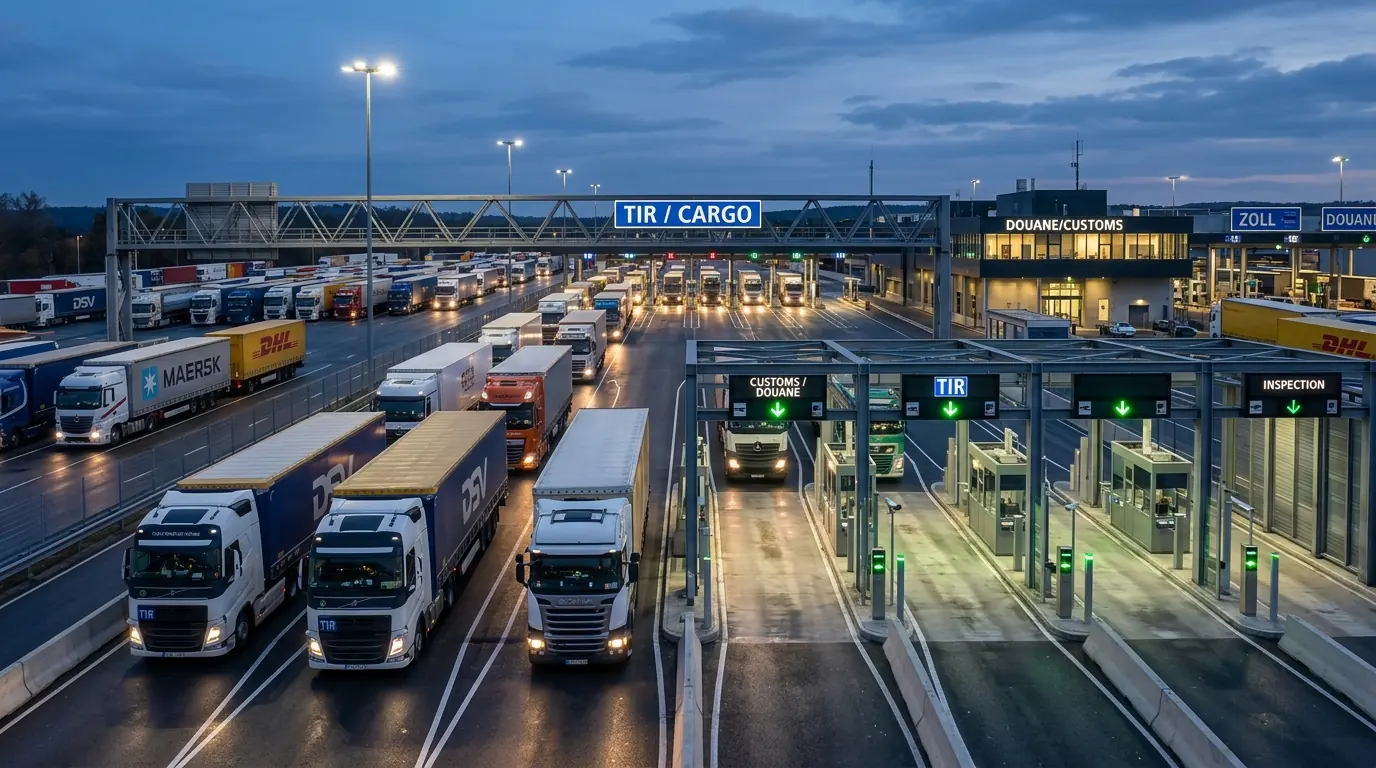
- Commercial freight entering the UK via Dover or the Eurotunnel must acquire a valid Goods Movement Reference (GMR) in the HMRC GVMS system prior to boarding European shuttles or ferries.
- Door-to-door transit times range from 72 hours via dedicated double-driver express minivans to 5–7 days for road FTL, and 10–14 days for direct maritime container shipping from Ambarlı/İzmir to Felixstowe.
- UK importers can utilize Postponed VAT Accounting (PVA) through the Customs Declaration Service (CDS), avoiding upfront import VAT cash drain at port of entry.
- 1. Post-Brexit Regulatory Reality: Transition from EU Customs Union to UK-Turkey FTA
- 2. Documentation Evolution: Why A.TR is Invalid for the UK & How EUR.1 Declarations Work
- 3. Border Systems: GVMS, GMR Generation, and S&S GB Safety Declarations
- 4. Transit Route Comparison: Highway via Calais/Dover vs. Direct Container to Felixstowe
- 5. Operational Compliance Checklist: UK CDS, EORI, and Postponed VAT Accounting (PVA)
1. Post-Brexit Regulatory Reality: Transition from EU Customs Union to UK-Turkey FTA
Following the United Kingdom's formal withdrawal from the European Union single market and customs union, trade dynamics between Turkey and Great Britain underwent a fundamental structural transformation. Under the pre-Brexit regime, industrial commodities moved seamlessly under the 1995 EU-Turkey Customs Union framework. Today, bilateral commerce is governed by the standalone UK-Turkey Free Trade Agreement (FTA), signed in December 2020 and updated for modern regulatory frameworks.
This regulatory shift means that Great Britain (England, Scotland, and Wales) operates as an independent third-country customs territory. Consignments destined for British consignees are subject to full border import formalities, safety and security electronic filings, and preferential origin scrutiny regardless of whether the goods transit through continental European territory.
Compliance Critical: Northern Ireland continues to apply specific EU customs rules under the Windsor Framework. Consignments routed to Belfast require separate documentation protocols compared to shipments clearing into mainland Great Britain ports.
2. Documentation Evolution: Why A.TR is Invalid for the UK & How EUR.1 Declarations Work
The single most catastrophic mistake Turkish exporters and British importers continue to commit is attempting to clear UK customs using an A.TR Movement Certificate. Because the A.TR certificate certifies "free circulation" status within the EU-Turkey Customs Union—and the UK is no longer an EU member state—British Border Force and HMRC categorically reject A.TR forms.
Under the UK-Turkey Free Trade Agreement, tariff-free (0% customs duty) preferential access is strictly predicated on proving originating status. Shippers must utilize one of two legally recognized proof-of-origin mechanisms:
- EUR.1 Movement Certificate: Issued by Turkish customs authorities and endorsed through the electronic MEDOS system, certifying that goods satisfy specific product-specific rules of origin (PSR).
- Approved Exporter Origin Declaration: For authorized economic operators, an explicit origin declaration printed directly on the commercial invoice containing the company's customs authorization number.
3. Border Systems: GVMS, GMR Generation, and S&S GB Safety Declarations
To streamline roll-on/roll-off border points without holding physical infrastructure, HMRC introduced the Goods Vehicle Movement Service (GVMS). GVMS integrates customs declarations into a single consolidated digital barcode known as the Goods Movement Reference (GMR).
Prior to a truck boarding a ferry at Calais, Dunkirk, or the Eurotunnel Le Shuttle terminal in Coquelles, the haulier must input all Transit Accompanying Document (TAD / T1) Movement Reference Numbers (MRNs) and Safety & Security Great Britain (S&S GB) ENS declarations into GVMS to generate a valid 12-digit GMR. Without an active GMR, terminal check-in systems will automatically reject the vehicle from the boarding lanes.
4. Transit Route Comparison: Highway via Calais/Dover vs. Direct Container to Felixstowe
Selecting the appropriate transport modality between Turkey and the United Kingdom requires balancing transit lead times, freight expenditure, and cargo sensitivity.
| Evaluation Metric | Dedicated Express Minivan | Standard Road Freight (FTL) | Shortsea Ocean Container (FCL) |
|---|---|---|---|
| Transit Time (Istanbul to London) | 72 Hours Guaranteed | 5 - 7 Days | 10 - 14 Days |
| Primary Routing Corridor | Kapıkule ➔ Eurotunnel Le Shuttle | Kapıkule / Ro-Ro ➔ Calais/Dover | Ambarlı / İzmir ➔ Felixstowe / Southampton |
| Customs Entry Mechanism | Pre-lodged GMR + Fast-Track | GVMS GMR Barcode via Calais | UK CDS Port Inventory Clearance |
| Ideal Cargo Profile | Automotive JIT, Urgent Fashion, Pharma | Commercial Manufacturing, Palletized Goods | Heavy Industrial, Bulk Volume, Retail Stock |
5. Operational Compliance Checklist: UK CDS, EORI, and Postponed VAT Accounting (PVA)
- GB EORI Validation: Ensure the British consignee possesses an active EORI number with the "GB" prefix registered in the Customs Declaration Service (CDS).
- Accurate Tariff Classification: Cross-reference Turkish GTIP codes with the UK Integrated Online Tariff to identify exact import duty rates and non-tariff quotas.
- Postponed VAT Accounting (PVA): Instruct your UK customs clearance agent to elect PVA on the CDS entry. This allows the importer to account for import VAT on their periodic UK VAT return rather than paying upfront cash at the port.
- Transit Discharge at Destination: If moving under a T1 transit bond, confirm the vehicle reports to an approved inland customs facility (IBF) or authorized consignee warehouse to discharge the T1 before breaking trailer seals.
Frequently Asked Questions
1Can I use an A.TR certificate for shipping from Turkey to the UK?
2What is GVMS and why is a GMR required for UK trucking?
3What are the typical transit times from Turkey to the United Kingdom?
Seamless Post-Brexit Shipping from Istanbul to Great Britain
Avoid border queues and documentation traps. Request instant freight quotes for road FTL, express minivans, or ocean container shipping to the UK.
Brosan Lojistik is a fully licensed international freight forwarder and member of TİO and UND, operating asset-backed transport networks from Turkey to Europe, the UK, and global trade corridors.