Bypassing Balkan Border Bottlenecks: Turkey to Europe Intermodal & Ro-Ro Logistics Guide
Updated October 2026 · Brosan Lojistik Operations Desk
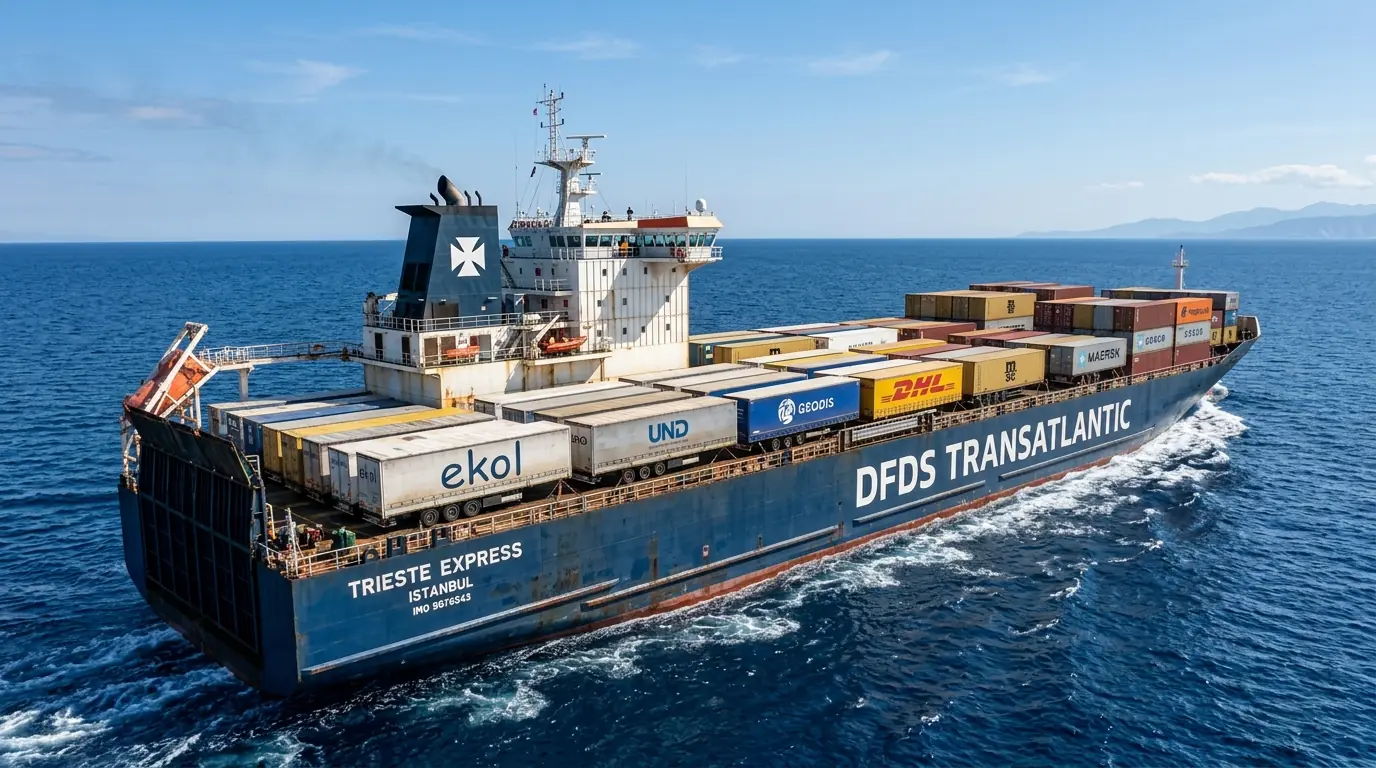
- 48 to 72 hour border crossing bottlenecks at Kapıkule are completely bypassed via maritime Ro-Ro services.
- Unaccompanied trailer transport eliminates driver visa restrictions and transit permit (dozvola) shortages.
- Dedicated block trains from Trieste deliver cargo to Munich, Ludwigshafen, and Bettembourg in 20-30 hours.
- Achieves up to 75% carbon emission reduction, perfectly aligning with European Green Deal corporate compliance.
1. The Highway Chokepoint: Kapıkule & Hamzabeyli Border Delays
For European supply chain managers and freight forwarders sourcing from Turkey, overland highway transport across the Bulgarian border has become the single largest source of delivery volatility. At Kapıkule and Hamzabeyli customs gates, peak agricultural seasons and weekend departure surges regularly trigger commercial vehicle tailbacks exceeding 25 kilometers, trapping drivers in customs lines for 48 to 72 hours.
These bottlenecks trigger compounding transit disruptions under European Union tachograph driving-time regulations. When drivers burn their available weekly hours idling at border gates, shipments face mandatory layovers before even reaching Serbia or Hungary. The predictable 5-day standard road transit easily slips to 8 or 9 days.
Operations Desk Insight: Border congestion adds hidden costs: engine idling fuel burn, driver overnight stipends, and spot demurrage surcharges increase total road freight expense by 12% to 18% per departure.
2. The Maritime Sea-Bridge: Pendik & Yalova to Trieste
The proven antidote to Balkan border friction is the maritime intermodal sea bridge. Operating high-frequency sailings from Istanbul (Pendik, Ambarlı) and Yalova directly across the Mediterranean to the Port of Trieste on our Turkey to Italy freight corridor or Toulon/Sète (France), modern Ro-Ro vessels bypass non-EU overland transit completely.
Under the unaccompanied semi-trailer model, only the cargo-loaded trailer boards the vessel; the tractor unit and driver remain in Turkey. The sea crossing takes approximately 65 hours at steady maritime speeds, untouched by highway road closures, weather delays, or driver visa quotas.
3. European Rail Corridors from Port of Trieste
Upon vessel discharge at Trieste's specialized ro-ro docks (Molo VII and Riva Traiana), customs transit formalities (NCTS T1) clear semi-trailers directly onto waiting rail pocket wagons.
Key scheduled intermodal block train connections include:
- Trieste to Munich (Germany): 18 to 22 hours rail transit connecting into our Turkey to Germany freight corridor.
- Trieste to Ludwigshafen / Cologne: 28 hours direct to the Rhine-Ruhr chemical and automotive cluster.
- Trieste to Bettembourg (Luxembourg): Primary European intermodal gateway connecting France, Belgium, and the UK.
- Trieste to Wels / Vienna (Austria): 16 hours express connection for Central European distribution.
4. Direct Road vs. Intermodal: Speed, Cost, and ESG Matrix
| Evaluation Metric | Direct Road Transport (FTL) | Ro-Ro + Rail Intermodal |
|---|---|---|
| Transit Time (Istanbul to Munich) | 5 - 8 Days (Border-dependent) | 5 - 6 Days (Clockwork Precision) |
| Border Disruption Risk | High (Kapıkule, Serbia, Hungary) | Zero (Single Sea/Rail T1 Bond) |
| Driver Visa & Dozvola Dependency | Strict quota constraints | 100% Unaffected (Unaccompanied) |
| CO2 Emissions (per ton-km) | ~65 - 85g CO2 | ~18 - 24g CO2 (75% Reduction) |
| Weekend Driving Bans (Sunday) | Full stoppage across DE / AT / FR | Trains operate 24/7 without bans |
Achieving 75% carbon emission reductions directly supports European Green Deal and corporate ESG goals. Shippers can calculate verified transport carbon metrics and compliance reports using our interactive CBAM Carbon Calculator.
5. Essential Shipper Checklist for Craneable Trailers
- Craneable Chassis Certification: Verify trailers comply with Code XL and P400 / Huckepack crane lifting slot standards.
- Cargo Lashing & Load Restraint: Secure freight according to EN 12195-1 maritime and railway dynamics; dynamic rail shunting forces require certified anti-slip mats and tension belts.
- Seamless NCTS T1 Issuance: Ensure transit documentation accurately declares the authorized destination customs office in Germany, Austria, or Benelux.
- Port Delivery Cutoffs: Deliver unaccompanied units to Istanbul Pendik or Yalova terminal yards at least 6 hours prior to vessel departure.
Discover how intermodal freight routing via Ro-Ro sea bridges connects Turkish exporters directly to our Turkey to Italy freight corridor at the Port of Trieste, enabling rapid block train transfers into our Turkey to Germany freight corridor while cutting transport emissions. Model your exact Scope 3 emissions reductions using our interactive CBAM carbon calculator.
Related Trade Corridors
Direct multimodal export routes connecting Turkish logistics hubs to European distribution networks.
Interactive Freight Planning Tools
Practical engineering calculators to model transport lead times, volumetric ratios, and carbon compliance.
Frequently Asked Questions
1How does Ro-Ro shipping from Turkey to Trieste bypass Balkan highway border delays?
2Are unaccompanied semi-trailers affected by European weekend driving bans?
3What is the carbon emissions reduction of intermodal Ro-Ro compared to road freight?
Secure Resilient, Green Turkey-Europe Logistics
Eliminate border uncertainties. Request competitive intermodal rates connecting Pendik and Yalova to Germany, Benelux, and the UK.
Brosan Lojistik Operations Desk coordinates international road, sea, air freight, and customs clearance services from Turkey to Europe, the UK, and global trade corridors.